
Who gets left out when care is not recognised?
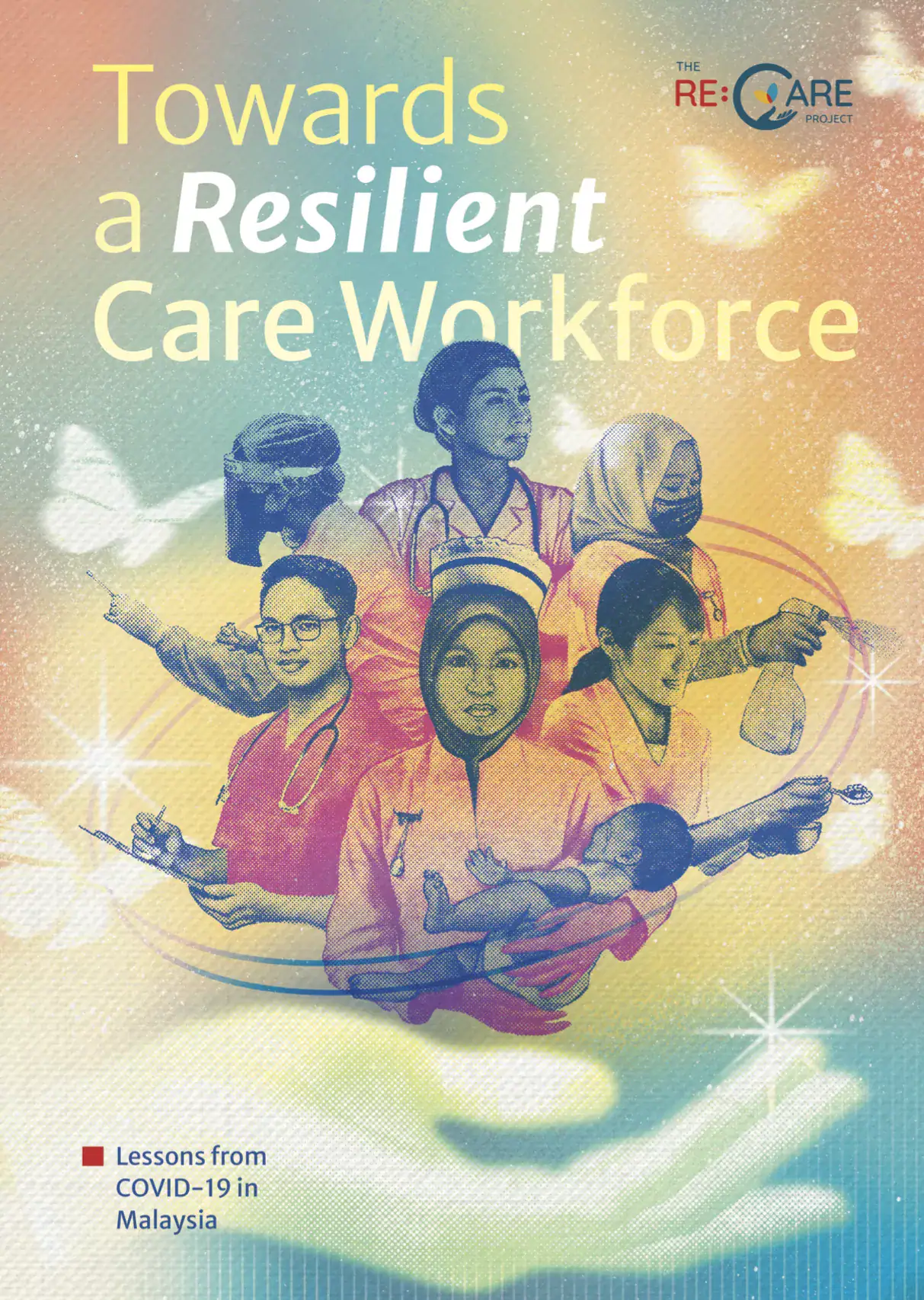
This report presents new evidence on the lived experiences of essential care workers in Malaysia, the majority of whom are women, and how their wellbeing was impacted by the COVID-19 pandemic. By examining health, social, and domestic workers through a large-scale, national study, influenced by participatory approaches, this report reveals the toll care work, both paid and unpaid, take on our nation’s care workforce.
From policy gaps in working conditions and support for unpaid care work, to issues such as high rates of burnout and risks to retention, the report highlights urgent challenges faced by the workforce—and the systemic changes needed to uphold their rights, dignity, and wellbeing.
Download Full Report:

Understanding the impact of a crisis like COVID-19 on the wellbeing of the care workforce in Malaysia is important as it has an influence on care workforce and ecosystem resilience. Drawing on the recommendations of our report, Towards a Resilient Care Workforce: Lessons from COVID-19, these two policy briefs focus on sustainable solutions to better support care workers, as well as the care ecosystem overall.